

For a growing food business, making the product is only part of the process. Once a sauce, salsa, dressing, or other product comes out of the kettle, it still needs to be filled, capped, coded, sealed, and labeled before it is ready for the customers.
At the NOCK, we’ve invested in equipment and production capabilities that help make those steps more efficient. Our filling and packaging setup allows products to move through multiple stages of production in a connected workflow.
From the Kettle to the Filler
Many of the products produced at NOCK begin in our commercial kettles. Once a product is ready for filling, it can be transferred directly from the kettle into our filling system, creating a more efficient transition from cooking to packaging.
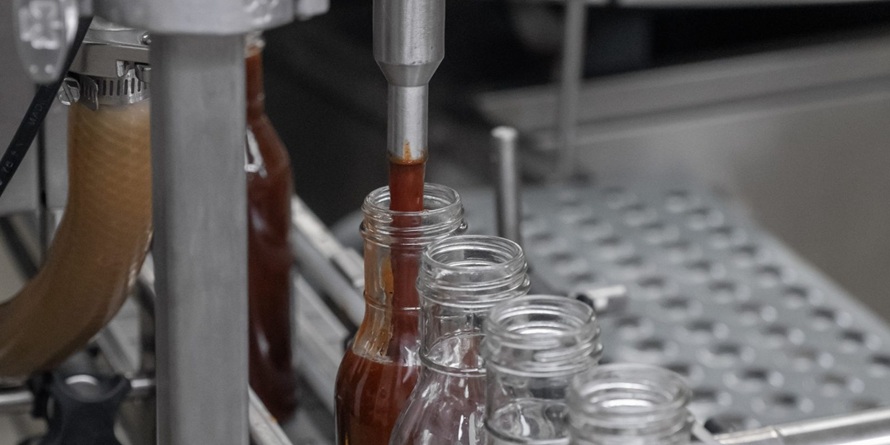
Our filling system includes a heated hopper and agitator and is designed to accommodate a range of products and production needs. The product can be pumped directly from the kettle to the filler, where it is filled into its containers.
Previously, hot product often had to be transferred manually into buckets and then poured into the filling hopper. Our current setup reduces unnecessary handling and creates a smoother production flow. This can be especially valuable when working with larger production runs or hot products that need to move quickly from the cooking process into the finished containers.
By connecting the cooking and filling steps, NOCK helps tenants spend less time manually transferring product and more time producing. It’s a simple change in the workflow, but one that can make a significant difference in production efficiency.
Filling Is Just the Beginning
Once a product has been filled, there are still several important steps before it becomes a finished package. NOCK’s production setup allows these steps to be incorporated into the same overall workflow.
Filled containers can be capped and then coded using our inkjet coding system. Depending on the product and packaging, a tamper-evident seal can be added before the containers move through our heat tunnel. The heat tunnel allows heat-shrink seals to be applied and finished efficiently, creating a consistent appearance across the production run.
Once those steps are complete, products can move into labeling and final packaging.
The result is a progression that looks something like:
Kettle → Pump → Fill → Cap → Code → Seal → Heat Tunnel → Label → Finished Product
While every product and production run is different, having these capabilities available in one facility allows tenants to develop a workflow that fits their particular product, packaging, and production needs.
From Production to the Next Step
The goal of this type of equipment isn’t simply to make production faster. It’s about creating a workflow that is practical, repeatable, and appropriate for the product being made.
For food businesses, packaging can become one of the biggest challenges as production increases. A process that works well for a few dozen containers may become difficult when a business needs to produce hundreds or thousands of units. Having access to filling and packaging equipment allows businesses to begin thinking about production as a complete process rather than a series of individual tasks.
As with any food manufacturing process, the appropriate filling method depends on the characteristics of the product, packaging, processing requirements, and production goals. NOCK’s team can work with you to determine how the available equipment can best fit into your process.